29th October 2026 - Karva Chauth - Karva Chauth (करवा चौथ) is a traditional Hindu vrat observed mainly by married women for the well-being, long life and prosperity of their husbands and family. In simple terms, it is a day of love, prayer, self-discipline and commitment. The fasting is important, but from a Sanatan perspective the deeper purpose of a vrat is not simply “going without food.” Vrat means making a sacred resolve — controlling our ordinary desires for a period and directing the mind towards Bhagwan.
- Date:29/10/2026 19:00 - 29/10/2026 22:43
- Location
Description
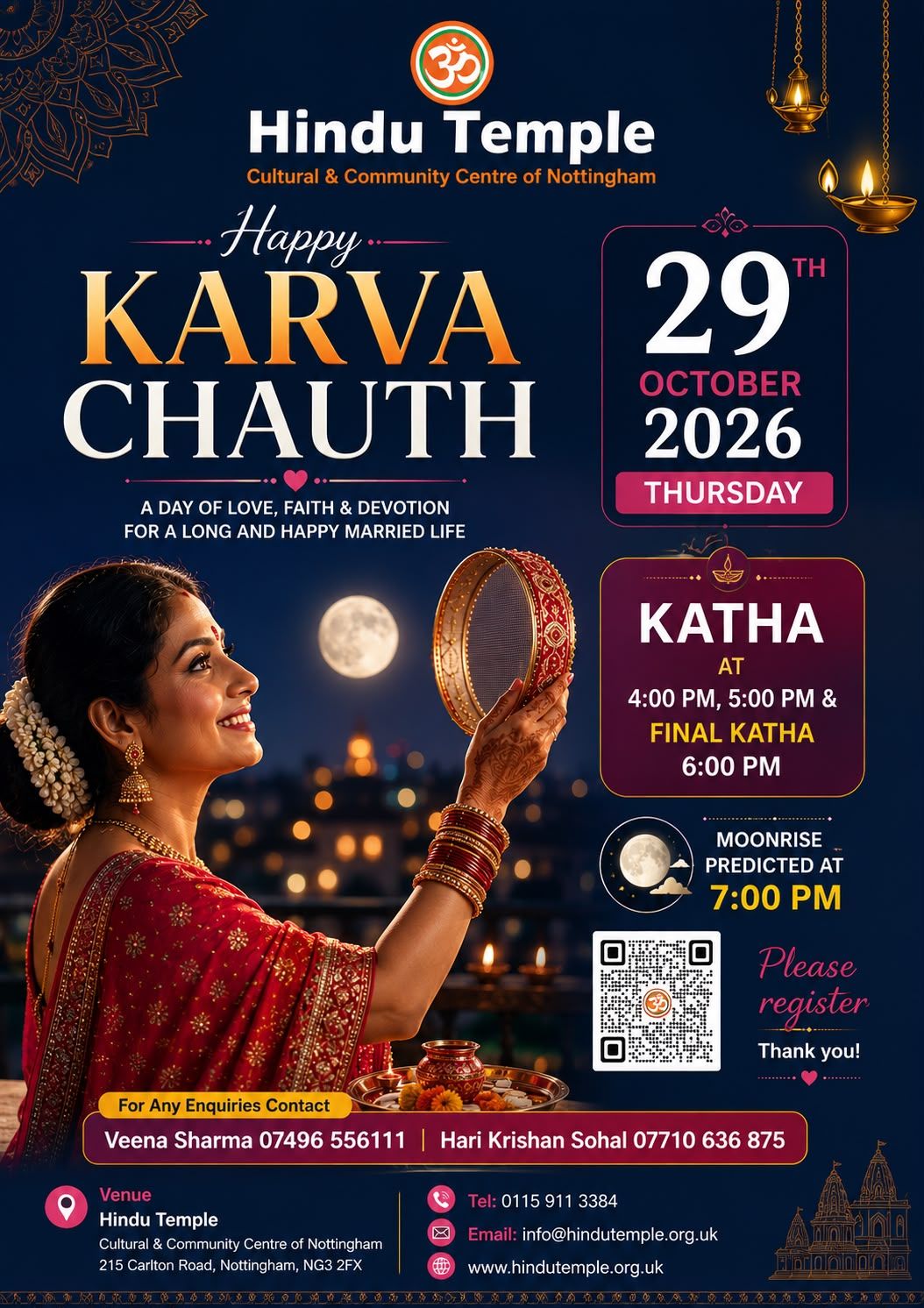 Karva Chauth (करवा चौथ) is a traditional Hindu vrat observed mainly by married women for the well-being, long life and prosperity of their husbands and family.
In simple terms, it is a day of love, prayer, self-discipline and commitment. The fasting is important, but from a Sanatan perspective the deeper purpose of a vrat is not simply “going without food.” Vrat means making a sacred resolve — controlling our ordinary desires for a period and directing the mind towards Bhagwan.
Why do we celebrate it?
Karva refers to the traditional earthen pot used during the puja, while Chauth means the fourth day. The vrat falls on Krishna Paksha Chaturthi, the fourth lunar day of the waning moon in Kartik according to the calendar tradition commonly followed in North India.
Traditionally, a married woman keeps the vrat and prays for her husband's āyu (long life), ārogya (good health), protection and prosperity. It is also associated with saubhagya — the blessings of married family life.
There are regional differences in the stories and rituals. Families may worship Shiva-Parvati, Ganesh Bhagwan and Kartikeya, hear the Karva Chauth Vrat Katha, and honour Chandra Dev when the moon appears. So there isn't one single ceremony followed identically by every Hindu family.
🪔 How to observe the vrat in a traditional Sanatan way
Before sunrise: Bathe and prepare for the vrat. In many Punjabi and North Indian families, the mother-in-law gives the daughter-in-law sargi, a pre-dawn meal. Eat and drink sufficiently before beginning the fast.
Then take a simple sankalp, mentally dedicating the vrat to Bhagwan and praying for the health, longevity and welfare of your spouse and family.
During the day: Traditionally the vrat is nirjala — no food and no water from sunrise until the moon is seen. But the spiritual value isn't supposed to come from harming yourself. Someone who is pregnant, elderly, unwell, taking medication or unable to safely undertake nirjala fasting should adapt the vrat appropriately.
The day should ideally include prayer, mantra/japa, reading or listening to the vrat katha, seva and keeping one's thoughts peaceful. Fasting all day while spending the day arguing rather defeats the spiritual exercise!
In the evening: Prepare the puja thali and karva. Families traditionally gather for puja and hear the Karva Chauth Vrat Katha. Depending upon family tradition, worship may include Ganesh Bhagwan, Shiva and Maa Parvati and prayers for akhand saubhagya and family welfare.
When the moon rises: Offer arghya (water) to Chandra Dev with reverence. In the popular North Indian custom, the wife views the moon, sometimes through a chalni (sieve), and then looks towards her husband.
After the prayers, traditionally the husband offers his wife water and the first morsel of food, bringing the vrat to an end. The couple then seek the blessings of elders and eat together.
🕉️ The deeper Sanatan meaning
Karva Chauth shouldn't be reduced to “the wife starves so her husband lives longer.” That's a rather thin explanation of an old tradition.
At its heart are several Sanatan ideas: sankalp (sacred determination), sanyam (self-control), shraddha (faith), dampatya dharma (commitment within marriage), gratitude and prayer for another person's welfare.
And in today's family life, there is nothing contrary to the spirit of the occasion in a husband also fasting or praying for his wife's health and long life. The traditional vrat may be undertaken by the wife, while the underlying value — wishing and working for each other's welfare — belongs to both.
So the simplest explanation is:
Karva Chauth is a sacred day when we temporarily put aside ordinary comforts, turn towards Bhagwan, and pray with love and devotion for the health, longevity and wellbeing of our spouse and family.