Sorry, registration has ended.
Hanuman Bahuk is: A powerful healing prayer to Lord Hanuman, written in deep devotion during suffering, asking for protection, strength, and relief from pain — both physical and spiritual.
- Date:17/03/2026 19:00 - 17/03/2026 20:00
- Location 215 Carlton Road, Nottingham,NG3 2FX UK (Map)
- More Info:HINDU TEMPLE CULTURAL AND COMMUNITY CENTRE OF NOTTINGHAM
Description
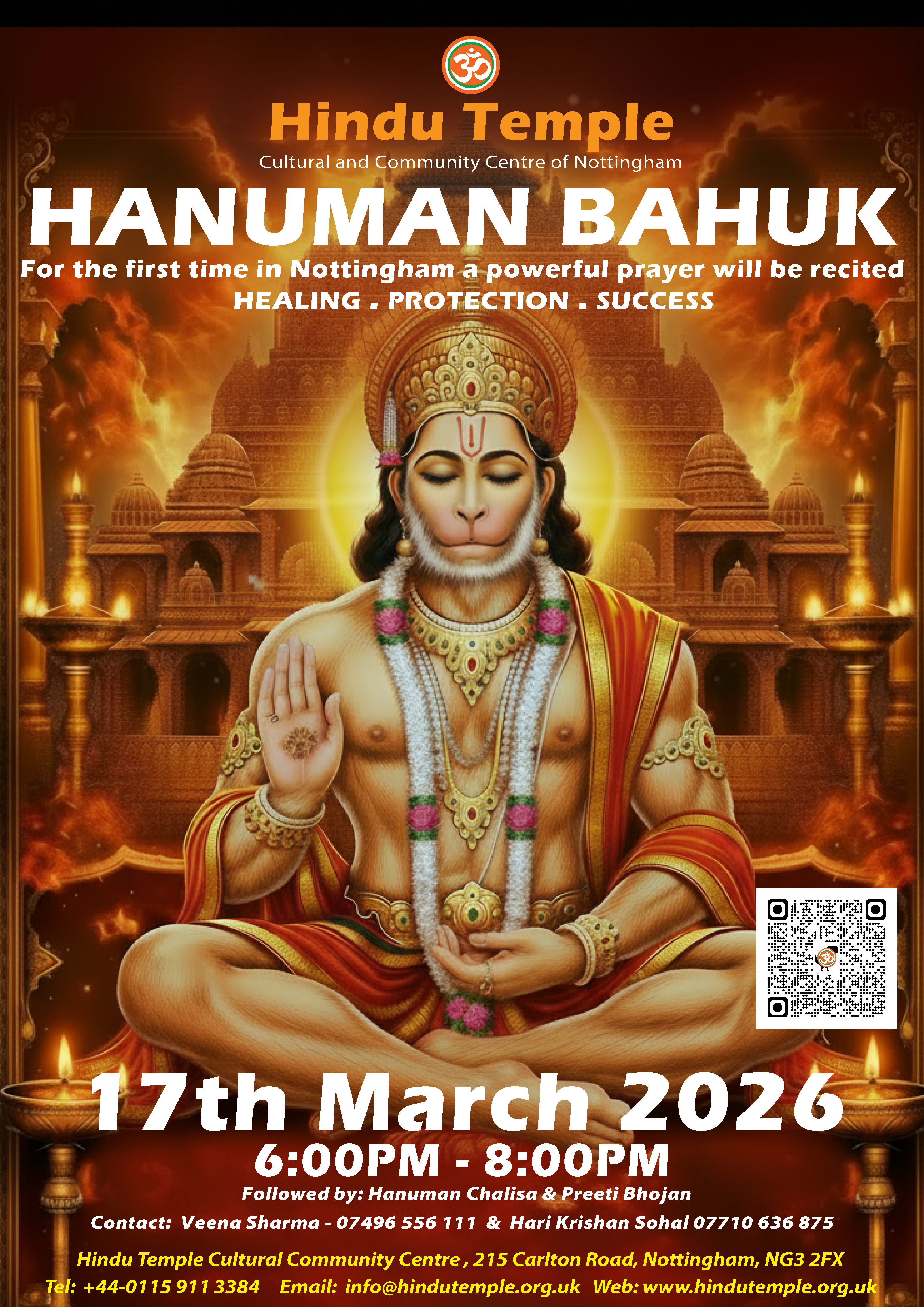
Hanuman Bahuk is a deeply revered devotional hymn dedicated to Lord Hanuman, composed by the great poet-saint Tulsidas. Unlike other hymns that celebrate the heroic exploits or moral virtues of Hanuman, the Bahuk specifically addresses human suffering, disease, and weakness, making it a potent prayer for healing. Its name, “Bahuk,” literally means “arm” or “limb,” but in the spiritual sense, it signifies strength, endurance, and the ability to overcome difficulties.
The hymn is traditionally recited during illness, physical pain, or emotional distress. Devotees believe that chanting Hanuman Bahuk invokes the divine energy of Hanuman, who is renowned for his extraordinary strength, courage, and unwavering devotion to Lord Rama. Through this prayer, one seeks relief from ailments, mental turmoil, and spiritual obstacles, aligning oneself with the protective and healing energies of Hanuman.
Spiritual Significance:
Hanuman Bahuk emphasizes surrender, devotion, and faith. In it, the devotee acknowledges their vulnerability and helplessness, recognizing that true strength comes from divine support rather than mere human effort. Hanuman is invoked as the ultimate protector, capable of dispelling fear, negativity, and disease. The prayer reinforces the idea that both physical and spiritual healing are intertwined; the body, mind, and soul must be in harmony for true wellness.
Structure and Themes:
The hymn contains multiple verses describing Hanuman’s heroic deeds, his eternal service to Lord Rama, and his ability to vanquish evil forces. Each verse combines praise with supplication, asking for specific blessings: relief from pain, protection from accidents, recovery from illness, and courage to face life’s challenges. The repetitive chanting creates a meditative rhythm, focusing the mind and fostering inner calm, which itself contributes to healing.
Devotional Practice:
Traditionally, devotees recite Hanuman Bahuk daily, especially during times of illness or stress. It is often chanted at dawn or dusk, accompanied by offerings like flowers, sandalwood, and incense. Devotees may also fast or observe certain rituals to deepen their devotion. The key is faith and concentration; the physical act of chanting, combined with heartfelt belief, is considered central to experiencing the hymn’s healing power.
Psychological and Emotional Benefits:
Beyond its spiritual impact, Hanuman Bahuk provides emotional solace. It encourages perseverance, mental resilience, and courage. In moments of despair, reciting the hymn reminds the devotee of Hanuman’s unwavering devotion and limitless strength, inspiring hope and endurance. The rhythmic repetition acts like a mantra, calming anxiety, enhancing focus, and creating a sense of protection.
Conclusion:
Hanuman Bahuk is more than a prayer—it is a bridge between human weakness and divine strength. It teaches humility, devotion, and surrender while offering relief from suffering. By invoking Hanuman’s power, devotees seek not only the healing of the body but also the fortification of the mind and spirit. For centuries, it has remained a cherished spiritual practice, a testament to the enduring faith in Hanuman as a divine healer, protector, and source of inner strength. Reciting it with devotion is believed to bring comfort, courage, and miraculous relief from pain, making it a cornerstone of devotional healing in Hindu practice.