Sorry, registration has ended.
Lohri, in our culture, has always been more than a celebration — it’s a sacred moment where the warmth of the bonfire meets the blessings of the harvest. It carries the spirit of our elders, the pride of our fields, and the joy of families coming together under the winter sky. The vibrant phulkari, the crackle of sesame and jaggery sweets, the rewri and popcorn offered to Agni Devta, and the singing of old Lohri folk songs — these are the traditions that keep our heritage alive. Every chant around the fire is a reminder of gratitude for the harvest and hope for the season ahead. As the dhol echoes through the night and people break into bhangra and gidda, it’s not just dance — it’s the expression of a community that stands together in joy and togetherness. The exchange of gifts, the blessings for prosperity, and the warmth shared among families create memories that stay with us for life. In our tradition, Lohri is not just a festival… it’s a blessing, a gathering of hearts, and a celebration of the land that sustains us.
- Date:13/01/2026 18:30 - 13/01/2026 20:00
- Location 215 Carlton Road, Nottingham, UK (Map)
- More Info:Hindu Temple
Description
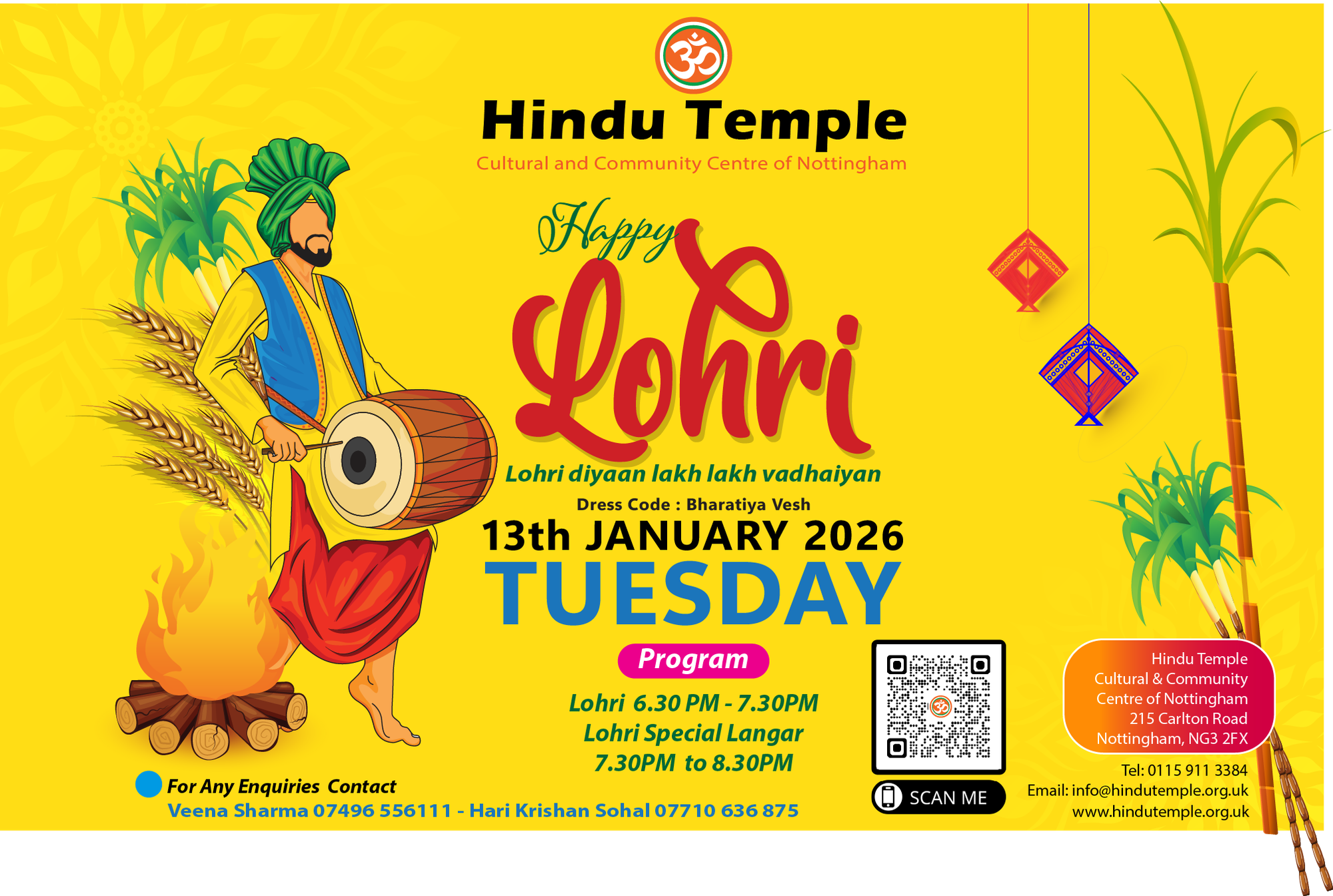
Lohri is one of the most cherished harvest festivals in North India, especially across Punjab, Haryana, and Himachal Pradesh. For our Indian community, it’s not just a seasonal celebration — it’s a living tradition that brings families together, honours our farmers, and passes cultural values to the next generation.
Festive Atmosphere
Children get excited for Lohri long before the day arrives. Homes are decorated, dhol beats echo through the streets, and the whole neighbourhood comes alive. The festival creates a joyful environment where children feel connected to their culture while soaking in the colours, sounds, and warmth of the celebration.
Bonfire Rituals
The bonfire is at the heart of Lohri. Children gather with elders around the fire, offering sesame seeds, peanuts, popcorn, and rewri while singing traditional folk songs. The crackling flames symbolise prosperity and protection, and the togetherness around the bonfire strengthens family and community bonds.
Sweets and Traditional Treats
No Indian festival is complete without food, and Lohri is no exception. Children eagerly enjoy the seasonal delights — gur ki gajak, til ki rewri, roasted peanuts, and jaggery sweets. These simple, earthy foods remind us of our agricultural roots and the richness of our Indian culinary heritage.
Traditional Attire
Wearing colourful ethnic outfits — phulkari dupattas, kurta-pyjamas, salwar kameez — adds a special charm to the celebration. Children love dressing up, not just for the fun of it but because it connects them to the cultural identity passed down through generations.
Dance and Music
The sound of dhol sets the perfect rhythm for Bhangra and Gidda. Children jump in with their own energy, learning steps from elders and celebrating with pure enthusiasm. These dances are more than entertainment — they are living expressions of Punjabi pride and joy.
Community Bonding
Lohri reminds us that festivals are stronger when shared. Families visit each other, neighbourhoods gather, and children play games together. This sense of unity is a key part of Indian values — celebrating together, supporting each other, and keeping traditions alive as a community.
Honouring the Harvest
Children also learn the deeper meaning of Lohri: gratitude for nature and respect for the hard work of farmers. This awareness helps them understand how closely our lives are tied to the land and its blessings.
Lohri Gifts
The tradition of giving Lohri gifts — especially to children and new parents — adds excitement and generosity to the festival. Whether it’s sweets, small presents, or blessings, these gestures strengthen the bonds between families.
Lohri is not just a festival for our Indian community — it’s a celebration of roots, relationships, culture, and gratitude. It creates memories that children carry into adulthood, ensuring our traditions stay strong and meaningful for generations.